Category: Development
21 entries found (2 pages)

NativePHP for Mobile Is Now Free: Finally I Can Try It!
I confess I’ve been following NativePHP for Mobile since it was announced. The idea of being able to make native mobile applications with Laravel and only PHP seemed - and seems - a very good thing.
But there was a problem: the price. When I just wanted to try it, experiment, play a bit… the license cost held me back. I couldn’t justify the expense just to “curiously explore.”
Well, they just announced that NativePHP for Mobile v3 is completely free. Open Source, MIT license, free forever.

When Claude Plans Your Route on Mars: NASA Uses AI for Perseverance
A few days ago I read news that left me thinking for a while. It’s not the first time I’ve heard about AI in space, but it is the first time I’ve read about Claude planning routes on Mars. And the best part: it worked.
NASA has been using Anthropic’s Claude to plan the Perseverance rover’s routes on Mars. Yes, you read that right: a generative language model generating navigation routes for a rover that’s 225 million kilometers away.

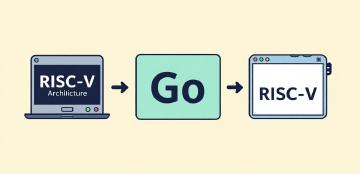
When Curiosity Meets Go: TinyEMU-Go and the Art of Porting an Emulator with AI
A few days ago I came across an article that literally left me with my mouth open. It’s about TinyEMU-Go: a RISC-V emulator written entirely in Go, ported from C using Claude. And the best part: you can run a complete Linux with a single command.
The Command Line That Gave Me Envy
go run github.com/jtolio/tinyemu-go/temubox/example@2c8151233c2d
And boom, you have a complete Linux running. No special permissions, no containers, no weird dependencies. A pure static Go binary.

Five principles for using AI professionally (without going crazy)
A few days ago I read an article by Dominiek about the 5 principles for using AI professionally and found myself constantly nodding. After years of watching technologies arrive and evolve, AI gives me the same feelings I had with other “revolutions”: enthusiasm mixed with a necessary dose of skepticism.
Dominiek’s article especially resonated with me because it perfectly describes what we’re experiencing: a world where AI is getting into everything, but not always in the most useful or sensible way.

Local AI on Raspberry Pi 5 with Ollama: Your private AI server at home
A few months ago I came across something that really caught my attention: the possibility of having my own “ChatGPT” running at home, without sending data anywhere, using only a Raspberry Pi 5. Sounds too good to be true, right?
Well, it turns out that with Ollama and a Pi 5 it’s perfectly possible to set up a local AI server that works surprisingly well. Let me tell you my experience and how you can do it too.

Idempotency in Laravel: How to Avoid Duplicates in Your APIs with Elegance
In modern API development, one of the most critical challenges is ensuring that operations don’t execute multiple times accidentally. Imagine a user making a payment and, due to connectivity issues, clicking the “Pay” button multiple times. Without proper measures, you might process multiple payments for the same transaction. This is where idempotency comes into play.
What is Idempotency?
Idempotency is a mathematical concept applied to programming that guarantees that an operation produces the same result regardless of how many times it’s executed. In the context of APIs, it means you can make the same request multiple times without causing additional side effects.

Effect TS: The Library Revolutionizing Functional Programming in TypeScript
For a long time, TypeScript has lacked a robust standard library. While other languages like Rust, Go, or Python offer standard tools for error handling, concurrency, and side effects, TypeScript developers have had to resort to multiple specialized libraries. Effect TS is changing this by offering a unified and powerful solution for modern TypeScript application development.
What is Effect TS?
Effect is a powerful TypeScript library designed to help developers easily create complex, synchronous, and asynchronous programs. Inspired by ZIO from Scala, Effect brings functional programming principles to TypeScript in a practical and accessible way.

Discovering the World of GIS Programming with Python: A Complete Immersion in Dr. Qiusheng Wu's Course
In today’s world, geospatial data is everywhere. From map applications on our phones to global climate analysis, the ability to work with geographic information has become a fundamental skill for developers, data scientists, and analysts. Recently, I had the opportunity to explore Dr. Qiusheng Wu’s exceptional educational resource “Introduction to GIS Programming”, and I must say it is, without a doubt, one of the most comprehensive and accessible materials I’ve found for entering this fascinating field.

Complete Guide to Configuring Path Aliases in Node.js with TypeScript: Goodbye to Infinite '../../../'
Are you tired of seeing imports like import Logger from "../../../utils/logger" in your Node.js projects? If you develop applications with complex folder structures, you’ve surely encountered the labyrinth of dots and slashes that relative imports can become. Fortunately, TypeScript offers an elegant solution: Path Aliases.
In this complete guide, you’ll learn to configure path aliases in Node.js projects with TypeScript, forever eliminating those confusing imports and significantly improving the readability and maintainability of your code.

STORM: The AI System Revolutionizing Long-Form Article Writing by Simulating Human Research Process
Creating long, well-founded articles has traditionally been a complex task requiring advanced research and writing skills. Recently, researchers from Stanford presented STORM (Synthesis of Topic Outlines through Retrieval and Multi-perspective Question Asking), a revolutionary system that automates the Wikipedia-style article writing process from scratch, and the results are truly impressive.
In this detailed analysis, we’ll explore how STORM is transforming the way we think about AI-assisted writing and why this approach could forever change the way we create informative content.

API Documentation Library
An interesting resource to have on hand when we need to document an API:
Where we have selected, very graphic examples of how to display the documentation of our APIs.
If you know of any interesting one, just make a pull request to:

echarts 3
Thanks to a tweet from @juantomas, I came across a list of 9 JavaScript libraries for “Charts”: 9 Best JavaScript Charting Libraries.