
Auto Memory y Auto Dream: como Claude Code aprende y consolida su memoria
•
Inteligencia Artificial


60 entradas encontradas (5 páginas)

Lately I’ve been following a discussion that worries me quite a bit: to what extent are we delegating our thinking to AI. It’s not an abstract or philosophical question, it’s something very real I’m seeing day to day in our profession and in society in general.
Recently I read an article by Erik Johannes Husom titled “Outsourcing thinking” that, among other things, discusses the concept of “lump of cognition fallacy”. The idea is that, just as there’s an economic fallacy saying there’s a fixed amount of work to do, some believe there’s a fixed amount of thinking to do, and if machines think for us, we’ll just think about other things.
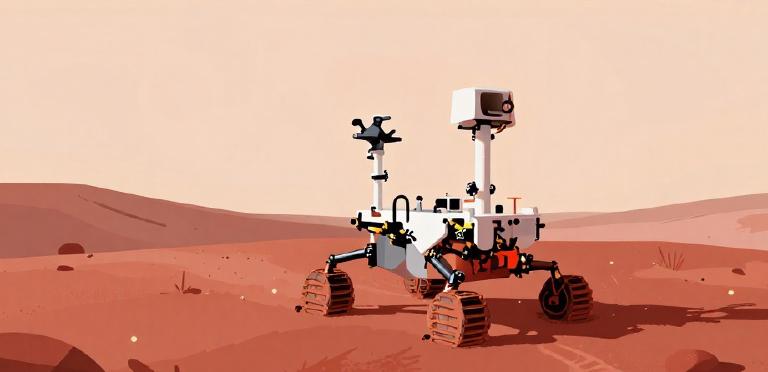
Hace unos días leí una noticia que me dejó pensando rato largo. No es que sea la primera vez que oigo de IA en el espacio, pero sí es la primera vez que leo sobre Claude planeando rutas en Marte. Y lo mejor: funcionó.
La NASA ha estado usando Anthropic’s Claude para planear las rutas del rover Perseverance en Marte. Sí, has leído bien: un modelo de lenguaje generando rutas de navegación para un rover que está a 225 millones de kilómetros de distancia.
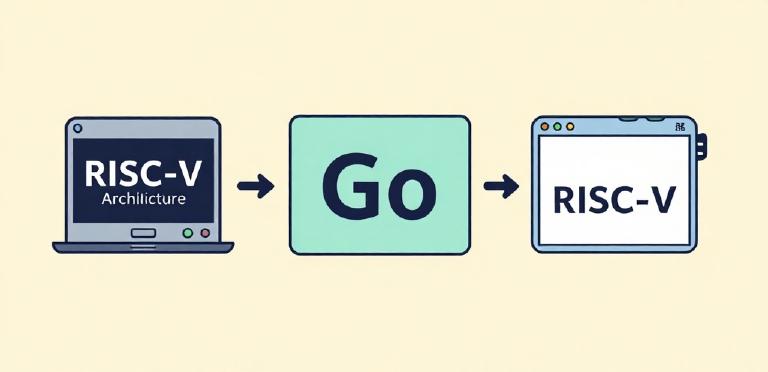
Hace unos días me topé con un artículo que me dejó literalmente con la boca abierta. No es que sea nuevo - en realidad es de enero de 2026, pero bueno, a veces llega tarde a mi radar - pero la combinación de tecnologías y la historia detrás me parecen fascinantes.
Se trata de TinyEMU-Go: un emulador de RISC-V escrito completamente en Go, portado desde C usando Claude. Y lo mejor: puedes ejecutar un Linux completo con un solo comando.
A few days ago I read news that left me thinking for a while. It’s not the first time I’ve heard about AI in space, but it is the first time I’ve read about Claude planning routes on Mars. And the best part: it worked.
NASA has been using Anthropic’s Claude to plan the Perseverance rover’s routes on Mars. Yes, you read that right: a generative language model generating navigation routes for a rover that’s 225 million kilometers away.
A few days ago I came across an article that literally left me with my mouth open. It’s about TinyEMU-Go: a RISC-V emulator written entirely in Go, ported from C using Claude. And the best part: you can run a complete Linux with a single command.
go run github.com/jtolio/tinyemu-go/temubox/example@2c8151233c2d
And boom, you have a complete Linux running. No special permissions, no containers, no weird dependencies. A pure static Go binary.

Hace unos días Anthropic publicó un paper que me ha dado mucho en qué pensar. Se titula “Disempowerment patterns in real-world AI usage” y analiza, por primera vez a gran escala, cómo las interacciones con IA pueden estar disminuyendo nuestra capacidad de juicio autónomo.
Y no, no estamos hablando de escenarios de ciencia ficción tipo “Skynet toma el control”. Estamos hablando de algo mucho más sutil y, quizás por eso, más peligroso: la cesión voluntaria de nuestro juicio crítico a un sistema de IA.

Últimamente estoy siguiendo de cerca todo lo que rodea al protocolo MCP (Model Context Protocol), y hace poco me encontré con un proyecto que tiene bastante sentido: MCPHero.
La realidad es que aunque MCP está pegando fuerte, muchas librerías de IA “tradicionales” como openai o google-genai siguen sin soporte nativo para MCP. Solo soportan tool/function calls. MCPHero viene a solucionar precisamente esto: hacer de puente entre servidores MCP y estas librerías.
Lately I’ve been closely following everything around the MCP protocol (Model Context Protocol), and recently I found a project that makes a lot of sense: MCPHero.
The reality is that although MCP is taking off, many “traditional” AI libraries like openai or google-genai still don’t have native MCP support. They only support tool/function calls. MCPHero comes to solve exactly this: make a bridge between MCP servers and these libraries.
MCPHero is a Python library that lets you use MCP servers as tools/functions in native AI libraries. Basically, it lets you connect to any MCP server and use its tools as if they were native OpenAI or Google Gemini tools.
A few days ago Anthropic published a paper that gave me much to think about. It’s titled “Disempowerment patterns in real-world AI usage” and analyzes, for the first time at scale, how AI interactions may be diminishing our capacity for autonomous judgment.
And no, we’re not talking about science fiction scenarios like “Skynet taking control.” We’re talking about something much more subtle and, perhaps for that reason, more dangerous: the voluntary cession of our critical judgment to an AI system.

A few days ago Laravel Boost v2.0 was launched, and as someone curious about everything surrounding the Laravel ecosystem, I couldn’t help spending quite a while reading about the new features. The truth is there’s one feature that has my special attention: the Skills system.
For those who don’t know it, Laravel Boost is an AI tool that integrates with your Laravel projects to help you in daily development. With version 2.0 they’ve taken a major leap, introducing the Skills system that allows extending and customizing how AI works with your code.
Hace pocos días se lanzó Laravel Boost v2.0 y, como buen curioso que soy de todo lo que rodea al ecosistema de Laravel, no he podido evitar perder un buen rato leyendo sobre las novedades. La verdad es que hay una feature que tiene especialmente mi atención: el sistema de Skills.

A few days ago I read an article by Dominiek about the 5 principles for using AI professionally and found myself constantly nodding. After years of watching technologies arrive and evolve, AI gives me the same feelings I had with other “revolutions”: enthusiasm mixed with a necessary dose of skepticism.
Dominiek’s article especially resonated with me because it perfectly describes what we’re experiencing: a world where AI is getting into everything, but not always in the most useful or sensible way.