


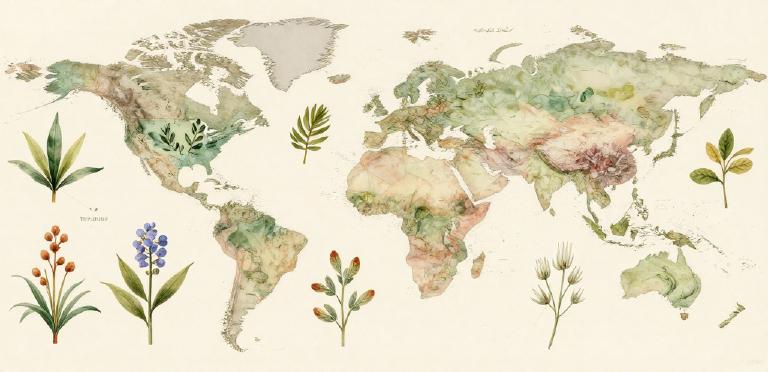
In today’s world, geospatial data is everywhere. From map applications on our phones to global climate analysis, the ability to work with geographic information has become a fundamental skill for developers, data scientists, and analysts. Recently, I had the opportunity to explore Dr. Qiusheng Wu’s exceptional educational resource “Introduction to GIS Programming”, and I must say it is, without a doubt, one of the most comprehensive and accessible materials I’ve found for entering this fascinating field.
Meeting the Instructor: Dr. Qiusheng Wu
Before diving into the course content, it’s important to know who is behind this extraordinary work. Dr. Qiusheng Wu is an Associate Professor and Director of Graduate Studies in the Department of Geography and Sustainability at the University of Tennessee, Knoxville. He also serves as an Amazon Scholar, which speaks to his relevance in the technology field.
What makes Dr. Wu special is his massive contribution to the open-source geospatial tools ecosystem. He is the creator of widely used Python libraries such as:
- geemap: For interactive geospatial analysis with Google Earth Engine
- leafmap: For interactive mapping and geospatial analysis with minimal coding
- segment-geospatial: For geospatial image segmentation
- geoai: For geospatial artificial intelligence applications
His work has been cited hundreds of times, and his tools are used by thousands of researchers and professionals worldwide.
The Course: A Complete Guide to GIS Programming
Structure and Content
The course “Introduction to GIS Programming” is available both as a book (553 pages) and as a complete course with videos and interactive materials. What impresses me most is its progressive and practical approach:
1. Solid Foundations
The course starts from the most basic Python concepts:
- Variables and data types
- Data structures
- String operations
- Loops and conditionals
- Functions and classes
- File handling
2. Data Analysis with NumPy and Pandas
Before jumping directly into geospatial content, the course ensures you have a solid foundation in traditional data analysis, which is fundamental for any subsequent work with geographic data.
3. Advanced Geospatial Programming
This is where the course really shines, covering:
- Vector Data with GeoPandas: Manipulation of polygons, lines, and points
- Raster Data with Rasterio: Analysis of satellite images and elevation data
- Multidimensional Analysis with Xarray: For climate and temporal data
- Interactive Visualization with Leafmap: Creating interactive web maps
- Geoprocessing with WhiteboxTools: Advanced terrain analysis
- 3D Mapping with MapLibre: Impressive three-dimensional visualizations
Technologies and Tools Covered
What distinguishes this course is the breadth of technologies it covers:
Cloud Computing
- Google Earth Engine: For geospatial big data analysis
- Geemap: Python interface for Earth Engine that makes work enormously easier
Advanced Analysis
- HyperCoast: For hyperspectral data visualization
- DuckDB: For high-performance geospatial analysis
- Apache Sedona: For distributed computing with geospatial data
Application Development
- Voila and Solara: For creating interactive dashboards
- GDAL/OGR: The fundamental libraries for geospatial processing
What Makes This Course Special
1. Total Accessibility
One of the most notable features is that all materials are free and open access. You can access:
- Course materials at geog-312.gishub.org
- Full class videos
- Jupyter notebooks with all examples
- Source code on GitHub
2. Multiple Execution Formats
The course offers complete flexibility to run examples:
- Google Colab: No installation necessary
- MyBinder: Pre-configured cloud environment
- Docker: For consistent local environments
- Local installation: For maximum control
3. Practical and Realistic Approach
Each concept is accompanied by real-world examples using authentic datasets. These aren’t artificial exercises, but real problems you’d face in professional work.
4. Community and Support
Dr. Wu maintains an active community around his tools, with Discord channels, active GitHub, and regular responses to community questions.
My Personal Experience with the Course
What I Liked Most
1. Logical Progression: The course takes you by the hand from basic concepts to very sophisticated analysis without abrupt jumps.
2. Modern Tools: It focuses on the most current libraries and techniques, not legacy software that no one uses anymore.
3. Open Source Focus: Everything is based on open-source tools, meaning you can apply what you learn without licensing costs.
4. Visual Examples: The notebooks are full of maps, graphs, and visualizations that make learning much more engaging.
Challenging Aspects
1. Learning Curve: If you have no previous experience with Python, the initial part can be intense.
2. Tool Diversity: The number of libraries and tools covered can be overwhelming at first.
3. Time Required: It’s a substantial course that requires consistent dedication to fully benefit from it.
Practical Use Cases
During my exploration of the course, I’ve identified multiple practical applications:
1. Environmental Analysis
- Deforestation monitoring using satellite images
- Analysis of changes in water bodies
- Urbanization and city growth studies
2. Geospatial Business Intelligence
- Retail location analysis
- Distribution route optimization
- Geographic market analysis
3. Scientific Research
- Climate studies using temporal data
- Biodiversity and conservation analysis
- Natural hazard modeling
4. Application Development
- Geospatial APIs
- Real-time monitoring dashboards
- Web applications with interactive maps
Complementary Resources
The Complete Book
The course is based on the book “Introduction to GIS Programming: A Practical Python Guide to Open Source Geospatial Tools” available in multiple formats:
- PDF in English: 553 pages on Leanpub
- Spanish edition: 572 pages
- Chinese edition: 540 pages
- Color print edition: Available on Amazon
Videos and Tutorials
The course includes a complete video series that complements the written material, especially useful for:
- Visual learners
- Seeing the workflow in action
- Understanding how to debug problems
- Learning best practices
Who Is This Course For?
Ideal For:
- Developers who want to expand into the geospatial realm
- Data scientists interested in data with a geographic component
- Researchers in environmental sciences, geography, urban planning
- Students of computer science, geography, or environmental sciences
- GIS professionals who want to modernize their skills
Prerequisites:
- Basic programming knowledge (not necessarily Python)
- Familiarity with basic mathematical concepts
- Genuine interest in geospatial data
- Time to dedicate to regular practice
The Future of GIS Programming
What makes this course particularly valuable is that it not only teaches current tools but prepares for the future of geospatial analysis:
Emerging Trends
- Cloud-native geospatial: Working directly with data in the cloud
- AI/ML geospatial: Integration of artificial intelligence
- Real-time analytics: Real-time analysis of data streams
- Big data geospatial: Handling massive datasets
Transferable Skills
The skills learned are highly transferable to:
- Traditional data science
- Modern web development
- Cloud computing
- Machine learning and AI
Final Reflections
After exploring this course in depth, I can affirm that “Introduction to GIS Programming” by Dr. Qiusheng Wu is an exceptional resource that fills an important gap in geospatial education. The combination of:
- High-quality technical content
- Practical and applied approach
- Completely free access
- Modern and relevant tools
- Active support community
…makes it a unique opportunity for anyone interested in the world of geospatial data.
In an era where geographic data is increasingly important for making informed decisions, having these skills can open doors to exciting professional opportunities in fields as diverse as technology, environmental research, urban planning, logistics, and many more.
My recommendation: If you have even a minimal interest in geospatial data, don’t hesitate to explore this course. The time investment required is more than compensated by the skills and perspectives you’ll gain.
Have you worked with geospatial data before? What tools have you used? I’d love to hear about your experience and opinions on this fascinating field!
Useful links:
- Complete course: geog-312.gishub.org
- Book: gispro.gishub.org
- Dr. Wu’s GitHub: github.com/giswqs
- Geemap: geemap.org
- Leafmap: leafmap.org

Comments