
Go 1.27 y los métodos genéricos: ocho años esperando
•
Desarrollo Web


22 entradas encontradas (2 páginas)

pontecesures.net is a personal project I’ve been running for years: the news portal of Pontecesures, my home town, a Galician municipality of about 3,000 people. The idea has always been a simple one — keeping the information about what happens there alive. Twenty-one years of archive, from 2005 to 2026, 29,559 entries.
The problem is that most of them are uncategorised or categorised inconsistently. When you’ve been publishing for two decades, taxonomies decay on their own: I ended up with 56 categories that no longer meant anything. An archive like that stops being browsable, and at that point much of its value is lost. It’s exactly the kind of task you keep putting off, and one I had wanted to tackle for a long time.

If you’ve been using Claude Code with Auto Memory enabled for a while, you’ve probably noticed that after several sessions, Claude’s notes about your project start accumulating contradictions. Entries saying “yesterday we decided to use Redis” without specifying which day “yesterday” was. Debugging notes referencing files that no longer exist. Three different entries about the same build quirk. What started as a useful notebook becomes noise.
Anthropic has just released Auto Dream, a feature that does exactly what its name suggests: it consolidates Claude Code’s memory the way the human brain consolidates memories during REM sleep.

I have been using Claude Code daily for months, and there is one configuration that has completely changed how it works with my code. It is not a new plugin, a more powerful model, or a magic prompt. It is something that has existed since 2016 and that most developers use without knowing it every time they open VS Code: the Language Server Protocol (LSP).
Karan Bansal published an excellent article explaining in detail how to enable LSP in Claude Code and why it matters. After trying it, I can confirm the difference is real and significant.

Greg Brockman, President and Co-Founder of OpenAI, recently published a thread that perfectly describes the moment we’re living in software development. According to him, we’re witnessing a genuine renaissance in software development, driven by AI tools that have improved exponentially since December.
The most striking part of Brockman’s thread is how they describe the internal change at OpenAI: engineers who previously used Codex for unit tests now see the tool writing practically all code and handling a large portion of operations and debugging. This isn’t an incremental improvement, it’s a paradigm shift.

A few days ago I discovered Agent Lightning, a Microsoft project that I believe marks a before and after in how we think about AI agent orchestration. It’s not just another library; it’s a serious attempt to standardize how we build multi-agent systems.
Agent Lightning is a Microsoft framework for orchestrating AI agents. It enables composition, integration, and deployment of multi-agent systems in a modular and scalable way. The premise is simple but powerful: agents should be components that can be combined, connected, and reused.

If you’re using tools like Claude Code, GitHub Copilot Workspace, or similar, you’ve probably noticed there’s technical jargon that goes beyond simply “chatting with AI”. I’m talking about terms like rules, commands, skills, MCP, and hooks.
These concepts are the architecture that makes AI agents truly useful for software development. They’re not just fancy marketing words — each one serves a specific function in how the agent works.
Let’s break them down one by one in a clear way.

Lately I’m seeing more and more AI models calling themselves “open source”. Llama, Mistral, Falcon… they all claim to be “open”. But are they really? How open are they actually?
I recently discovered the European Open Source AI Index (OSAI), a European initiative doing excellent work systematically evaluating how open generative AI models really are.

Recently, Addy Osmani published an article that gave me much to think about: “Self-Improving Coding Agents”. The idea is simple but powerful: agents that not only execute tasks, but improve their own performance over time.
This isn’t science fiction. It’s happening now, in 2026. And it has profound implications for the future of software development and, by extension, for all professions.
A self-improving agent is an AI system with the capacity to:
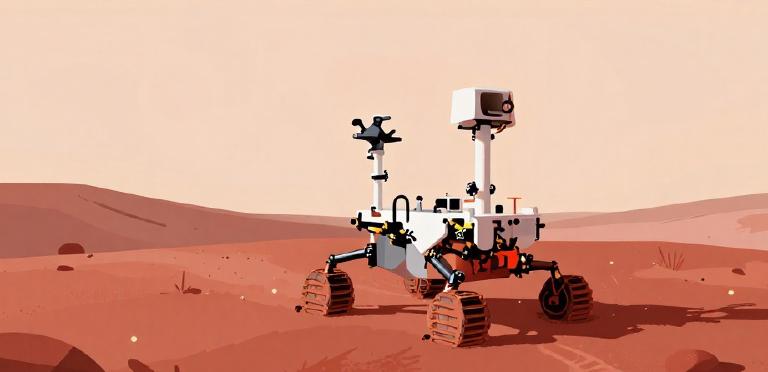
A few days ago I read news that left me thinking for a while. It’s not the first time I’ve heard about AI in space, but it is the first time I’ve read about Claude planning routes on Mars. And the best part: it worked.
NASA has been using Anthropic’s Claude to plan the Perseverance rover’s routes on Mars. Yes, you read that right: a generative language model generating navigation routes for a rover that’s 225 million kilometers away.
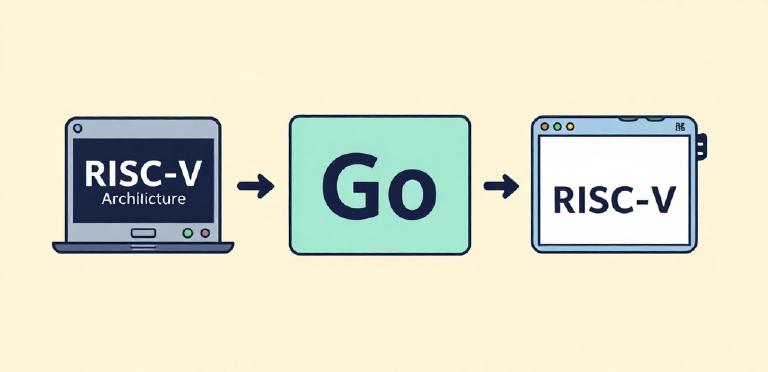
A few days ago I came across an article that literally left me with my mouth open. It’s about TinyEMU-Go: a RISC-V emulator written entirely in Go, ported from C using Claude. And the best part: you can run a complete Linux with a single command.
go run github.com/jtolio/tinyemu-go/temubox/example@2c8151233c2d
And boom, you have a complete Linux running. No special permissions, no containers, no weird dependencies. A pure static Go binary.

Lately I’ve been closely following everything around the MCP protocol (Model Context Protocol), and recently I found a project that makes a lot of sense: MCPHero.
The reality is that although MCP is taking off, many “traditional” AI libraries like openai or google-genai still don’t have native MCP support. They only support tool/function calls. MCPHero comes to solve exactly this: make a bridge between MCP servers and these libraries.
MCPHero is a Python library that lets you use MCP servers as tools/functions in native AI libraries. Basically, it lets you connect to any MCP server and use its tools as if they were native OpenAI or Google Gemini tools.

A few days ago Anthropic published a paper that gave me much to think about. It’s titled “Disempowerment patterns in real-world AI usage” and analyzes, for the first time at scale, how AI interactions may be diminishing our capacity for autonomous judgment.
And no, we’re not talking about science fiction scenarios like “Skynet taking control.” We’re talking about something much more subtle and, perhaps for that reason, more dangerous: the voluntary cession of our critical judgment to an AI system.